Tri-Service Integration, CDS/DMA Reforms, and the Road to Integrated Theatre Commands
A doctrinal and institutional study of jointness across the Indian Army, Indian Navy, and Indian Air Force — examining command integration, joint logistics, and tri-service education.
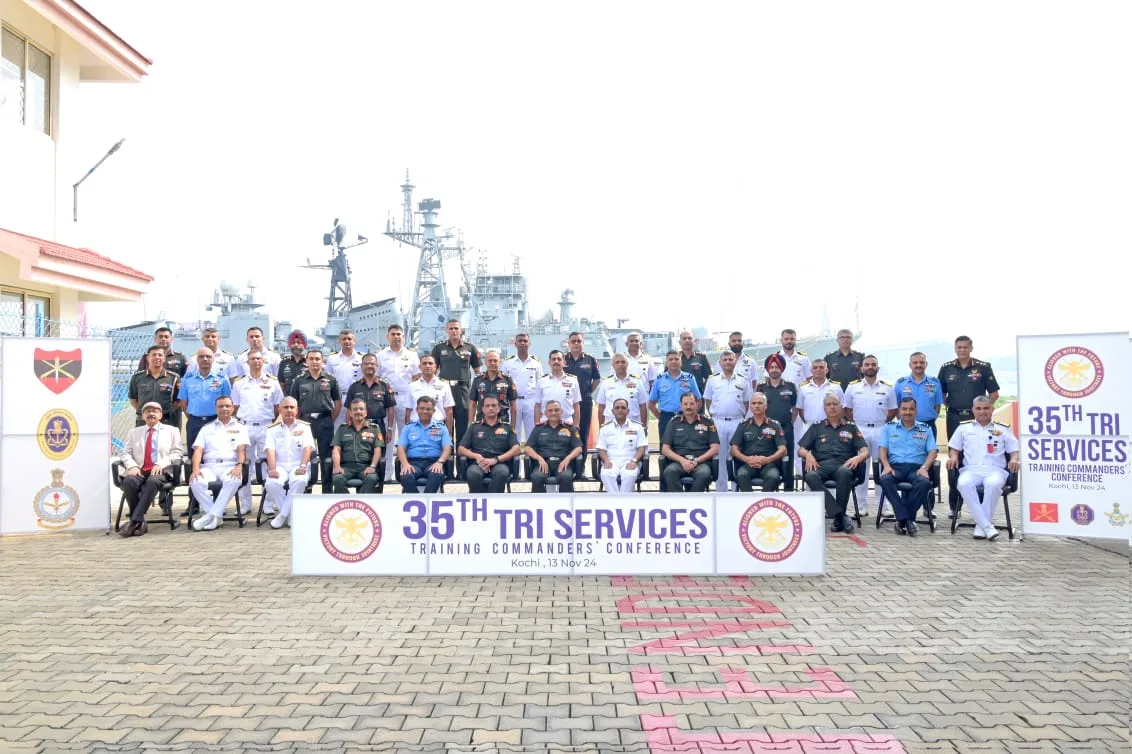
PLATE III (PIB PRID 2073130) — Chief of Defence Staff Gen Anil Chauhan chairing the 35th Tri-Services Training Commanders’ Conference (TSTCC) at Southern Naval Command, Kochi, aligning cross-service doctrinal curricula for upcoming Integrated Theatre Commands.
1. Evolution of Higher Defence Management
Modern multi-domain conflict does not respect traditional service boundaries between land, sea, and air. Recognising this reality, India’s higher defence reforms have progressed through landmark institutional milestones:
- 2001: Creation of Headquarters Integrated Defence Staff (HQ IDS) and India’s first geographic tri-service command, the Andaman & Nicobar Command (ANC) at Port Blair;
- 2003: Establishment of the functional tri-service Strategic Forces Command (SFC);
- 2019–2020: Creation of the post of Chief of Defence Staff (CDS) and the Department of Military Affairs (DMA) within the Ministry of Defence;
- Ongoing Integration: Joint logistics nodes, common defence communication networks, integrated air-defence architectures, and tri-service agencies for cyber, space, and special operations.
2. Five Pillars of Practical Jointness
- Integrated Planning & Prioritisation: Unified perspective planning so that acquisition decisions optimise multi-domain deterrence rather than siloed service inventories.
- Joint Logistics & Maintenance: Cross-service logistics nodes and common warehousing that reduce redundancy in forward theatres.
- Interoperable C4ISR: Seamless data-link integration enabling an Army radar, a Navy ship, and an Air Force fighter to share a single real-time operational picture.
- Joint Professional Military Education: Tri-service foundation and staff education at NDA Khadakwasla, DSSC Wellington, and NDC New Delhi.
- Doctrinal Coherence: Shared joint doctrines for amphibious, airborne, mountain, cyber, and electronic warfare operations.
Ministry of Defence (PIB) Disclosures & Doctrinal Synthesis
Official Government of India Press Information Bureau (PIB) records corroborated and synthesized for this research monograph under our 5-Level Verification Protocol.
Institutionalising Jointness 2.0: CDS/DMA Command Integration, Joint Training Doctrine, and Theatre Command Readiness
Chief of Defence Staff Gen Anil Chauhan chaired the 35th Tri-Services Training Commanders’ Conference at Southern Naval Command, Kochi, reviewing jointness in training, multi-domain warfighting curricula, and shared tri-service training infrastructure across the Indian Army, Navy, and Air Force.
True theatreisation cannot succeed via top-down organograms alone; standardising officer education, joint C4ISR staff procedures, and common logistics taxonomy at the Training Command level removes cultural stovepipes before operational theatre activation. Directly operationalises the statutory powers of the Inter-Services Organisations (Command, Control and Discipline) Act, 2023, preparing joint staff cadres for seamless cross-service postings.
Orbital Deterrence & Counter-Space Resilience: Inside the Defence Space Agency’s Maiden Exercise ‘Antariksha Abhyas’
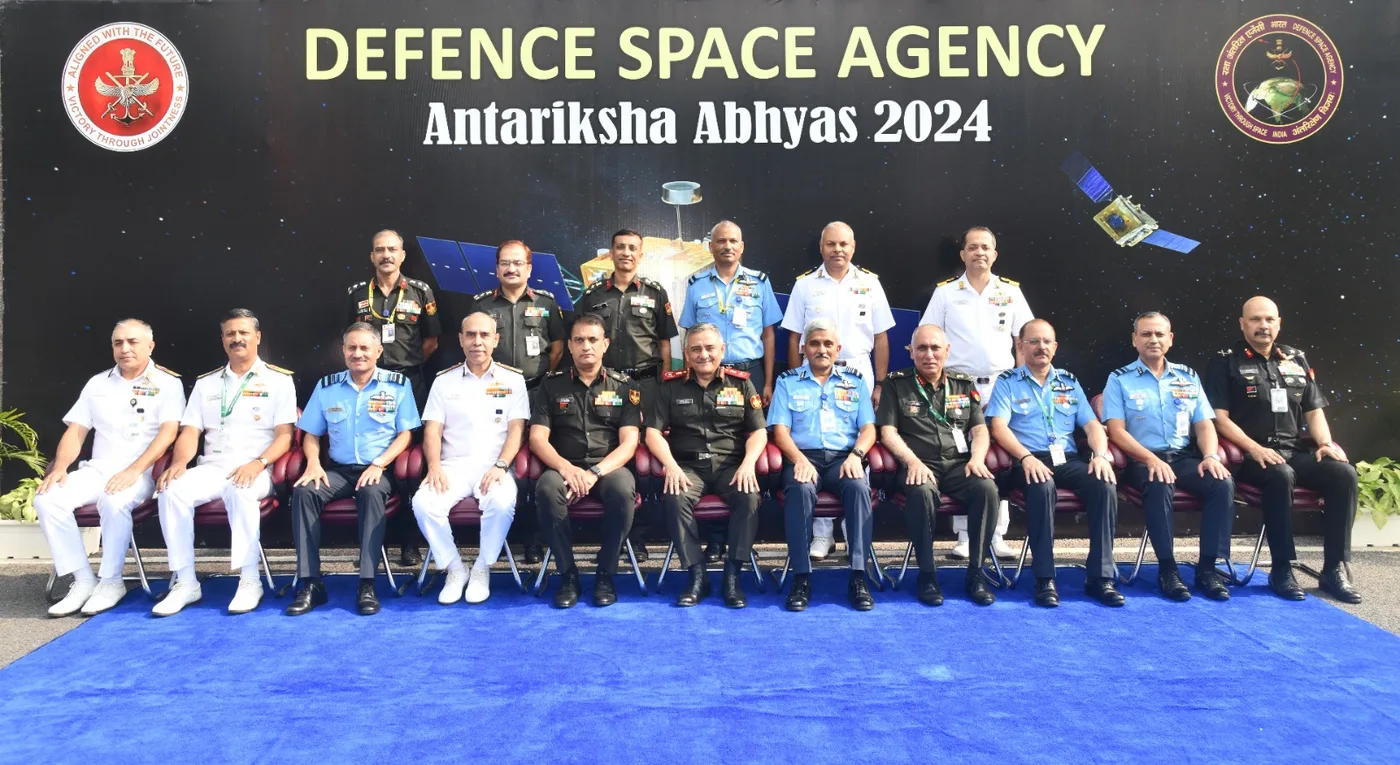
The Defence Space Agency under HQ Integrated Defence Staff conducted India’s first-ever dedicated military space wargame, Exercise Antariksha Abhyas – 2024, in New Delhi with participation from the Army, Navy, Air Force, ISRO, DRDO, and academia to wargame space situational awareness, satellite vulnerability, and orbital resilience.
Modern precision warfare—from Guided Pinaka and LRLACM to P-8I data links—depends on uninterrupted space-based ISR, navigation (NavIC), and SATCOM; wargaming counter-space threats under DSA institutionalises space as a warfighting domain. Establishes the doctrinal foundation for elevating the Defence Space Agency into a full-fledged Tri-Service Space Command linked to all regional theatre commands.