
Next War & Emerging Technologies: AI, Autonomous UAV/UCAVs, Counter-Drone, Electronic Warfare, Cyber & Space
Assessing how artificial intelligence, unmanned systems, electromagnetic spectrum dominance, space-based ISR, and quantum technologies are transforming military doctrine.
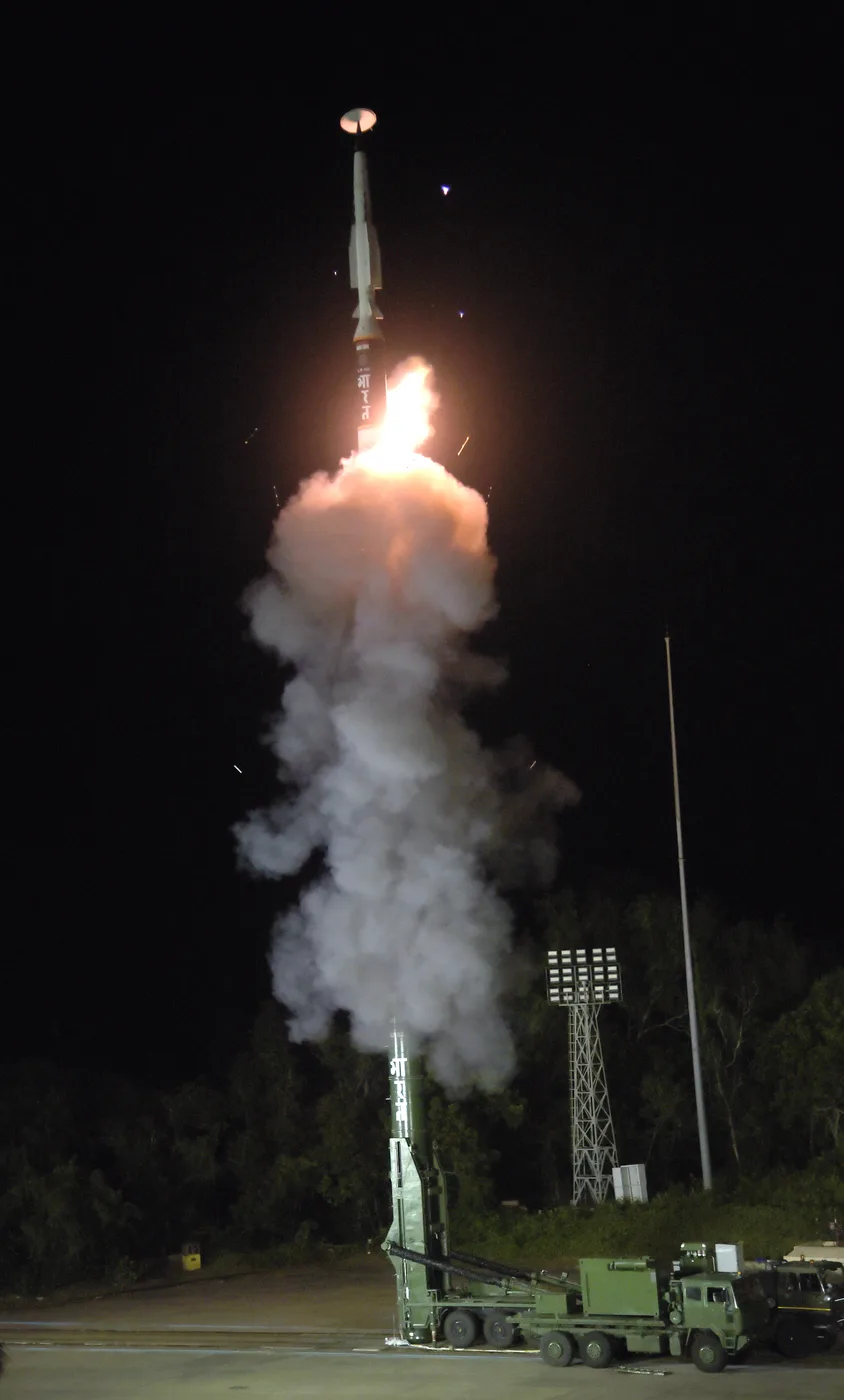
PLATE II (PIB PRID 2073994) — Nocturnal ignition and canister launch of India’s indigenous Long-Range Hypersonic Missile from Dr APJ Abdul Kalam Island, Odisha. Downrange shipborne and electro-optical telemetry confirmed terminal manoeuvrability across a >1,500 km strike envelope.
1. Eleven Core Technology Verticals
Modern military power rests on the integration of kinetic platforms with software-defined, multi-domain intelligence. Defence Observer’s Emerging Technology Desk tracks eleven interdependent domains:
- Artificial Intelligence (AI): Automated target recognition, predictive maintenance, wargaming simulation, and decision-support systems.
- Autonomous Systems: Unmanned ground vehicles (UGVs), autonomous underwater vehicles (AUVs), and unmanned surface vessels (USVs) for logistics, mine countermeasures, and perimeter patrol.
- UAV / UCAV & Loitering Munitions: High-altitude long-endurance ISR platforms, tactical quadcopters, swarm architectures, and precision strike UCAVs.
- Counter-Drone (C-UAS) Systems: Hard-kill (directed energy, air-burst munitions, interceptor drones) and soft-kill (RF jamming, GNSS spoofing) layered shields.
- Electronic Warfare (EW): Spectrum monitoring, radar warning receivers, direction finding, and stand-off/escort jamming across land, sea, and air.
- Cyber Warfare & Critical Infrastructure Defence: Hardening military networks, command-and-control nodes, energy grids, and transport systems against state-sponsored intrusion.
- Space Defence & Space-Based ISR: Persistent earth observation, synthetic aperture radar (SAR) satellites, secure satellite communications, and space situational awareness.
- Quantum Technologies: Quantum key distribution (QKD) for tamper-evident military communications, quantum sensing, and post-quantum cryptography.
- Military Robotics: Exoskeletons, EOD robots, and high-altitude mule robotics for forward post resupply.
- Advanced Sensors: AESA radars, electro-optical/infra-red (EO/IR) payloads, and acoustic seabed arrays.
- Battlefield Communication: Software-defined radios (SDRs), tactical data links, and resilient mesh networks.
2. Startup & Dual-Use Innovation
Through initiatives such as iDEX (Innovations for Defence Excellence) and the Technology Development Fund, Indian deep-tech startups and academic laboratories are accelerating prototype development Cycles — compressing the time required to adapt commercial dual-use breakthroughs for harsh military environments.
Ministry of Defence (PIB) Disclosures & Doctrinal Synthesis
Official Government of India Press Information Bureau (PIB) records corroborated and synthesized for this research monograph under our 5-Level Verification Protocol.
High-Mach Conventional Deterrence: Strategic Implications of DRDO’s Long-Range Hypersonic Glide & Anti-Access Strike Trial
DRDO successfully flight-tested India’s first long-range hypersonic missile from Dr APJ Abdul Kalam Island off the Odisha coast. Designed to carry multiple payloads for ranges exceeding 1,500 km for all three Services, the missile was tracked by multi-domain downrange ship and range sensors, confirming high-accuracy terminal manoeuvres.
Entry into the operational hypersonic glide and manoeuvring strike club compresses adversary air-defence decision cycles along both high-altitude continental sectors and distant Indo-Pacific maritime choke points. Provides the proposed Integrated Rocket Force (IRF) and Tri-Service Theatre Commands with a non-ballistic, depressed-trajectory conventional counter-force option immune to legacy terminal missile defence batteries.
Precision Rocket Artillery at Scale: Guided Pinaka PSQR Validation, Domestic Supply Chains, and Export Readiness
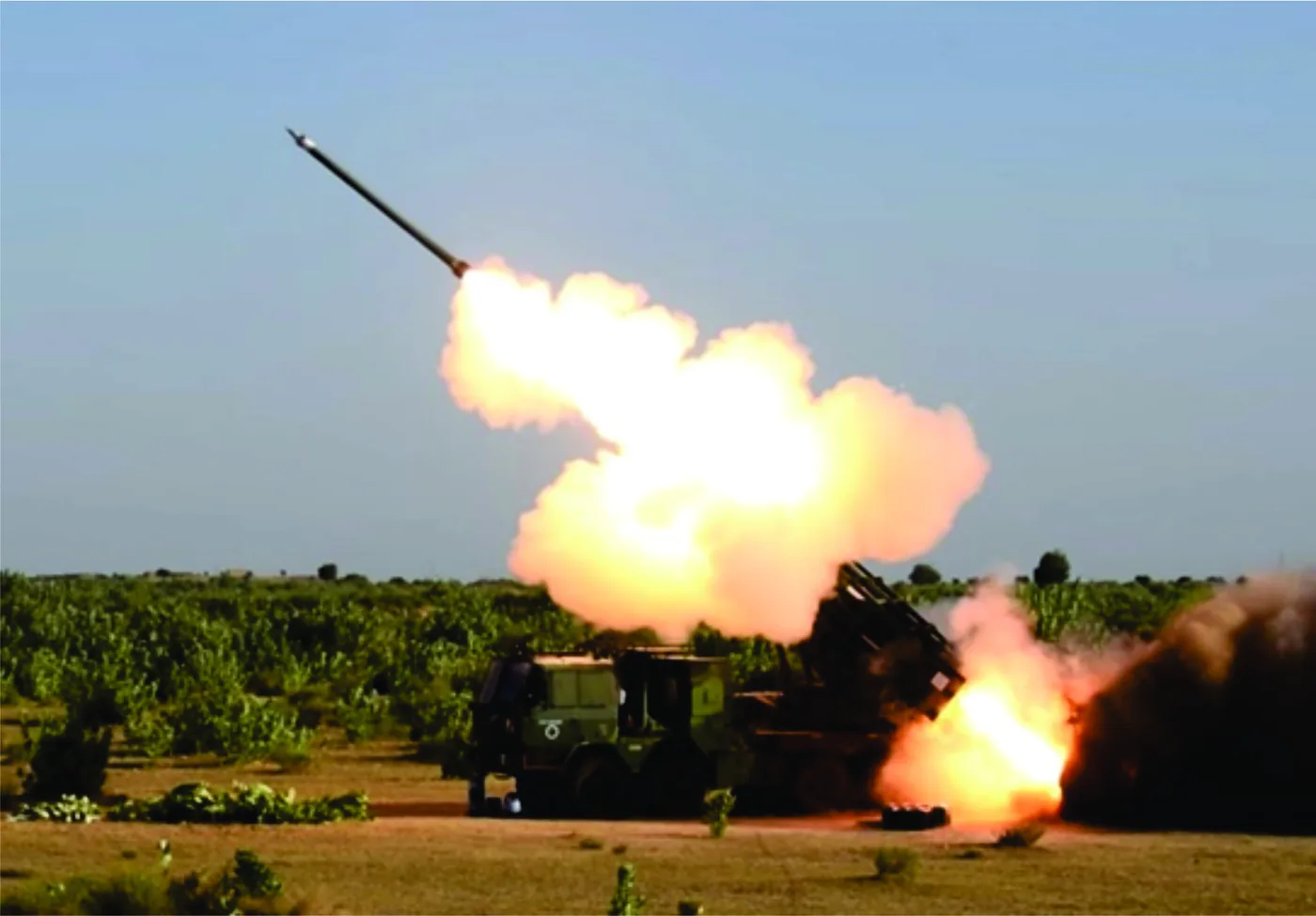
DRDO successfully completed the Provisional Staff Qualitative Requirements (PSQR) flight trials of the Guided Pinaka Multi-Barrel Rocket Weapon System across three phases at different field firing ranges, validating 75 km+ range, salvo accuracy, and dual-production readiness by Indian industry partners.
Transforming Pinaka from an area-saturation rocket system into a sub-10-metre CEP precision strike system gives Corps and Division commanders an organic, shoot-and-scoot counter-battery tool. Enables high-volume precision attrition of adversary logistics nodes, radar batteries, and assembly areas at ranges exceeding 75 km without risking manned strike aircraft.
Deep-Strike Standoff Architecture: Maiden Trial of the 1,000-km Long-Range Land Attack Cruise Missile (LRLACM)
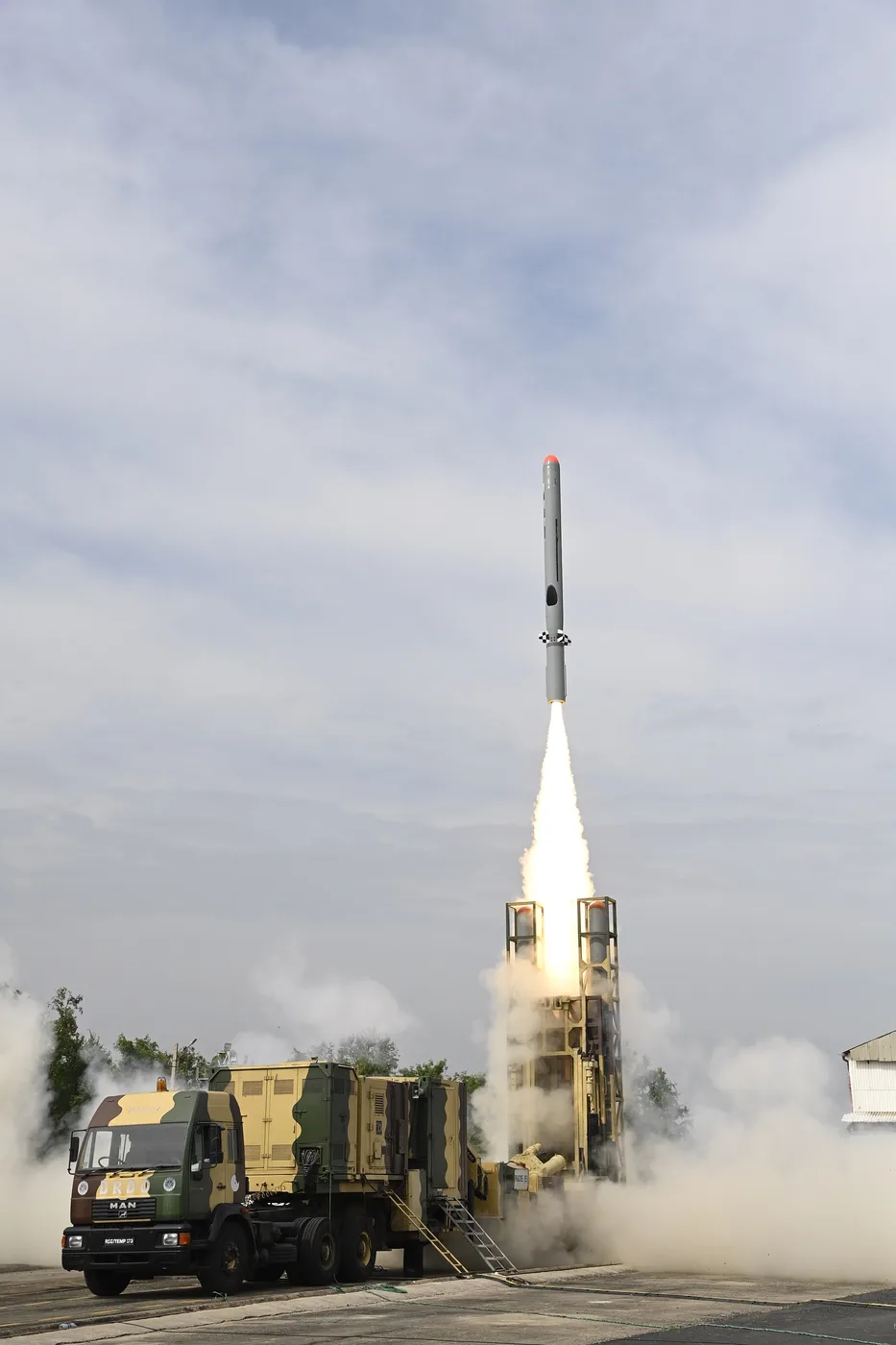
DRDO conducted the maiden flight-test of the Long-Range Land Attack Cruise Missile (LRLACM) from the Integrated Test Range, Chandipur. Configured for both mobile ground launchers and Indian Navy Universal Vertical Launch Modules (UVLM), the missile demonstrated waypoint navigation and low-altitude terrain-hugging flight.
A common subsonic terrain-hugging cruise missile compatible with both road-mobile launchers and naval vertical launch cells provides India with a scalable, long-range conventional precision-strike reserve. Allows Indian Navy destroyers and frigates to project deep land-attack precision firepower from maritime sanctuaries while strengthening continental theatre standoff reserves.