India’s Frontier Architecture: From Ladakh & Siachen to Island Territories & Coastal Security
A comprehensive framework for documenting India’s northern, western, eastern, and maritime frontiers — integrating terrain realities, infrastructure, border guarding forces, and border communities.
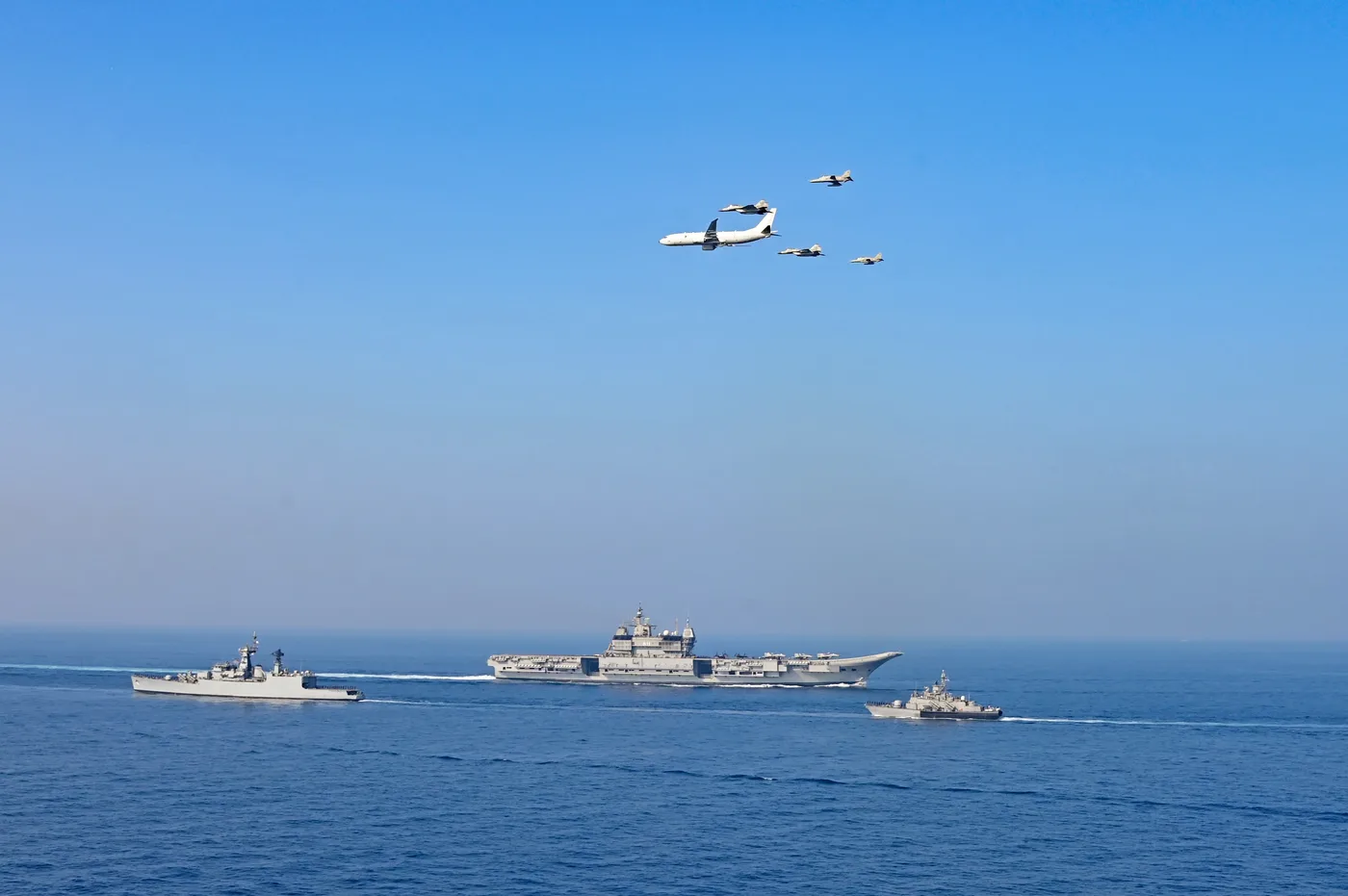
PLATE I (PIB PRID 2071695) — Indigenous Aircraft Carrier INS Vikrant (R11) operating in full Carrier Battle Group (CBG) formation alongside frontline fleet escorts, P-8I long-range maritime reconnaissance aircraft, and embarked MiG-29K naval strike fighters during Presidential operational review off Goa.
1. Four Strategic Frontier Theatres
Field-grounded documentation of India’s borders is a signature pillar of Defence Observer. Our research categorises India’s frontier architecture into four interconnected theatres:
1.1 Northern Frontier (Ladakh, Siachen & Jammu & Kashmir)
Spanning the Line of Actual Control (LAC), the Siachen Glacier, and the Line of Control (LoC), the northern frontier requires year-round high-altitude sustainment, extreme-cold-weather logistics, all-weather tunnel and road connectivity, and seamless coordination between the Indian Army, Indian Air Force, and Indo-Tibetan Border Police (ITBP) / Border Security Force (BSF).
1.2 Western Frontier (Punjab, Rajasthan & Gujarat)
Covering riverine plains, the Thar Desert, and the creek sectors of Kutch, western border management emphasises smart fencing, counter-drone and anti-tunnel vigilance, desert mobility, and close integration between the BSF, Indian Army, and local civil administration.
1.3 Eastern & Northeastern Frontier (Sikkim, Arunachal Pradesh & Northeast)
Characterised by steep Himalayan ridgelines, dense forests, and trans-boundary river valleys, the eastern theatre relies on mountain infrastructure, heli-lift logistics, and the distinct mandates of the Indian Army, ITBP, Sashastra Seema Bal (SSB), and Assam Rifles.
1.4 Maritime Frontiers & Island Territories
Beyond land boundaries, India’s maritime security envelope encompasses coastal surveillance chains, offshore assets, and the strategic outposts of Andaman & Nicobar (home to India’s first tri-service command) and Lakshadweep, safeguarded by the Indian Navy, Indian Coast Guard, and coastal police forces.
2. Border Communities as Strategic Partners
Frontier security is incomplete without the resilience of forward villages and border communities. Programmes supporting infrastructure, telecommunications, healthcare, and livelihoods in border blocks strengthen both human security and national preparedness.
3. Responsible Frontier Documentation Safeguards
In strict compliance with Defence Observer’s Sensitive Defence Reporting Policy, all frontier studies examine policy, infrastructure categories, historical context, and community welfare while strictly excluding troop movements, exact unit locations, or operationally sensitive details.
Ministry of Defence (PIB) Disclosures & Doctrinal Synthesis
Official Government of India Press Information Bureau (PIB) records corroborated and synthesized for this research monograph under our 5-Level Verification Protocol.
Indigenous Carrier Battle Group Maturity: INS Vikrant (R11) and Multi-Axis Sea Control in the Western Indian Ocean
The Supreme Commander of the Armed Forces embarked Indigenous Aircraft Carrier INS Vikrant off Goa, observing 15 frontline surface combatants and submarines, deck-launched MiG-29K fighter operations, missile firing drills, and coordinated P-8I maritime patrol flypasts.
Transitioning INS Vikrant from sea trials to an integrated 15-ship Carrier Battle Group validates the Indian Navy’s two-carrier operational doctrine, enabling simultaneous sea-control task groups across the Arabian Sea and Bay of Bengal. Coupling deck-launched fighter sorties with P-8I anti-submarine warfare telemetry closes surveillance gaps across the Nine-Degree Channel, Bab-el-Mandeb approaches, and Western IOR sea lines of communication.
High-Altitude Multi-Domain Integration: Exercise Poorvi Prahar and Sensor-to-Shooter Fusion Along the Eastern LAC
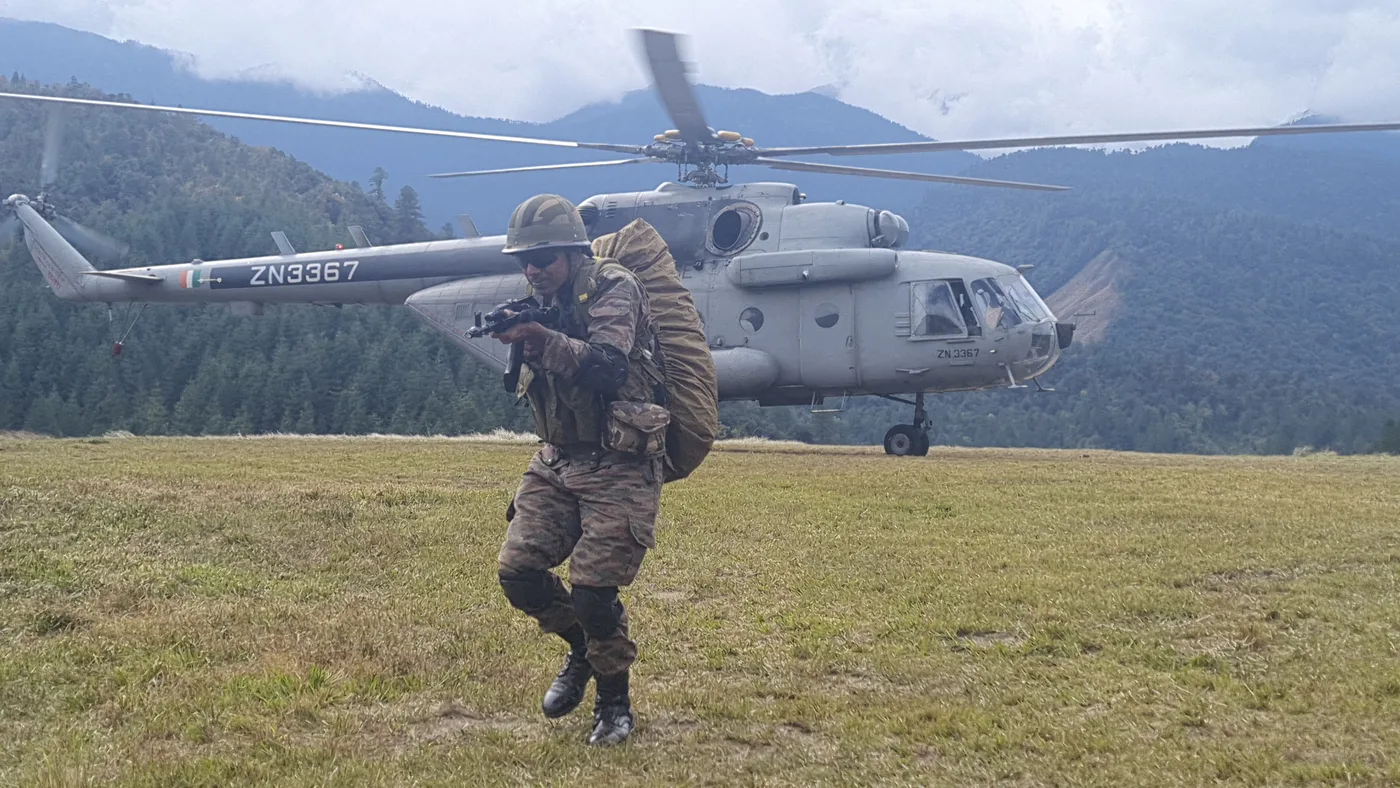
The Indian Armed Forces conducted high-altitude tri-service Exercise Poorvi Prahar in the forward areas of the Eastern Theatre from November 10 to 18, integrating IAF fighters, Chinook and Prachand helicopters, Indian Navy P-8I overland reconnaissance aircraft, and swarm drones with M777 ultra-light howitzers under a common operational picture.
Deploying Indian Navy P-8I maritime reconnaissance aircraft over the Himalayan crestline alongside IAF fighters and Army artillery proves that cross-domain sensor fusion is already operational ahead of formal theatre command notification. Shifts India’s continental posture from static linear border holding to rapid vertical envelopment and precision time-sensitive targeting across high-altitude valleys.
Littoral & Critical Infrastructure Defence: Auditing the 21-Agency Pan-India Coastal Security Grid in ‘Sea Vigil-24’
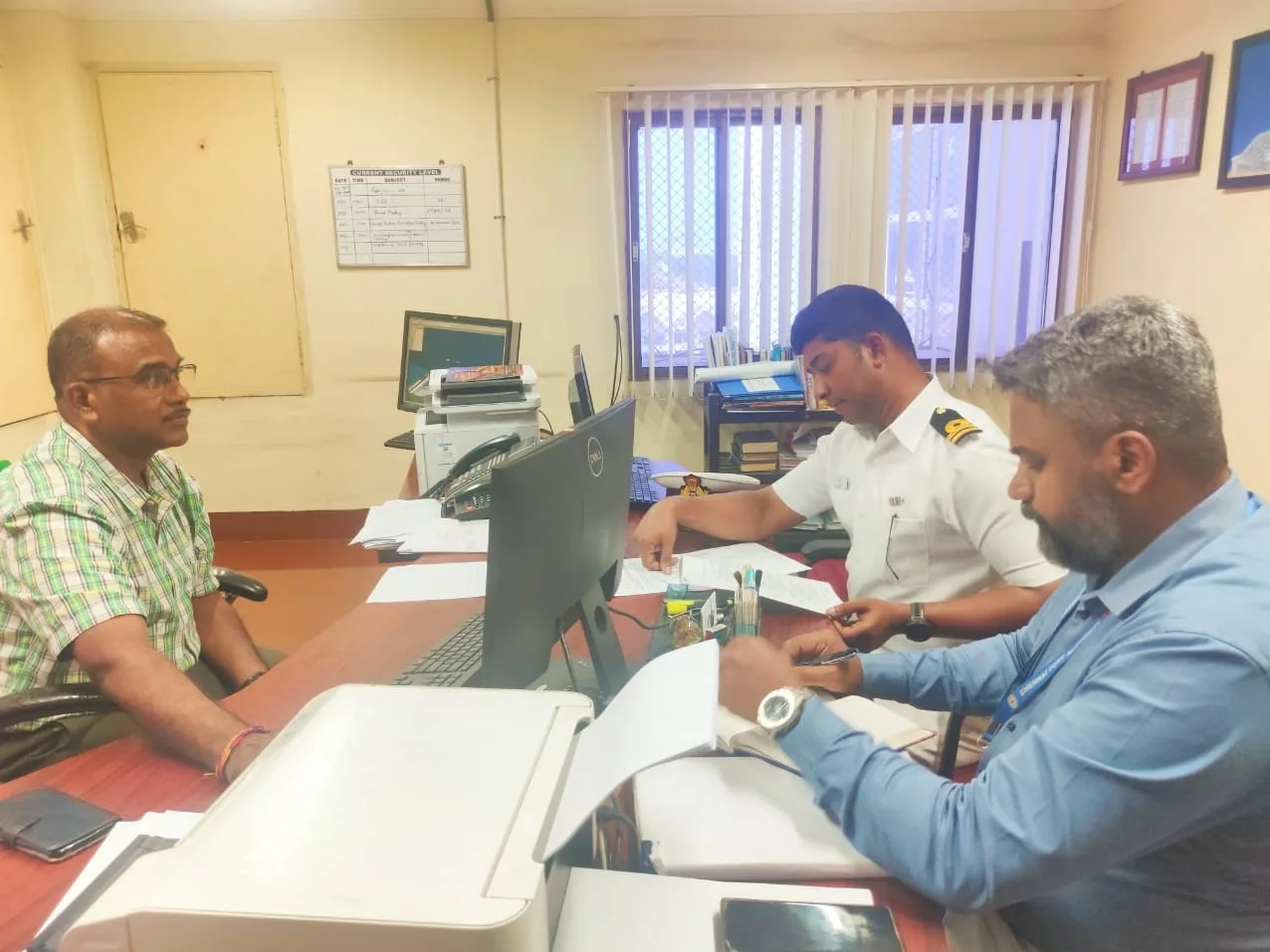
The Indian Navy coordinated the fourth edition of pan-India coastal defence Exercise Sea Vigil-24 across all coastal states and Union Territories, Lakshadweep, and the Andaman & Nicobar Islands, mobilizing 6 ministries and 21 security/maritime agencies to audit coastal radar chains, ports, oil rigs, and subsea cable landing stations.
Sea Vigil-24 bridges the seam between homeland littoral security and high-end naval warfighting (TROPEX), stress-testing the National Command Control Communication and Intelligence (NC3I) network against asymmetric sea-borne infiltration and hybrid sabotage. Hardens offshore energy platforms, nuclear installations, strategic naval bases, and submarine optical-fibre landing stations against grey-zone maritime disruption.