The ‘RAKSHA’ Defence Diplomacy Framework: Strategic Partnerships, Joint Exercises & Export Statecraft
Analyzing India’s expanding defence diplomacy architecture across strategic partnerships, capacity building, indigenous defence exports to 80+ countries, and maritime security.
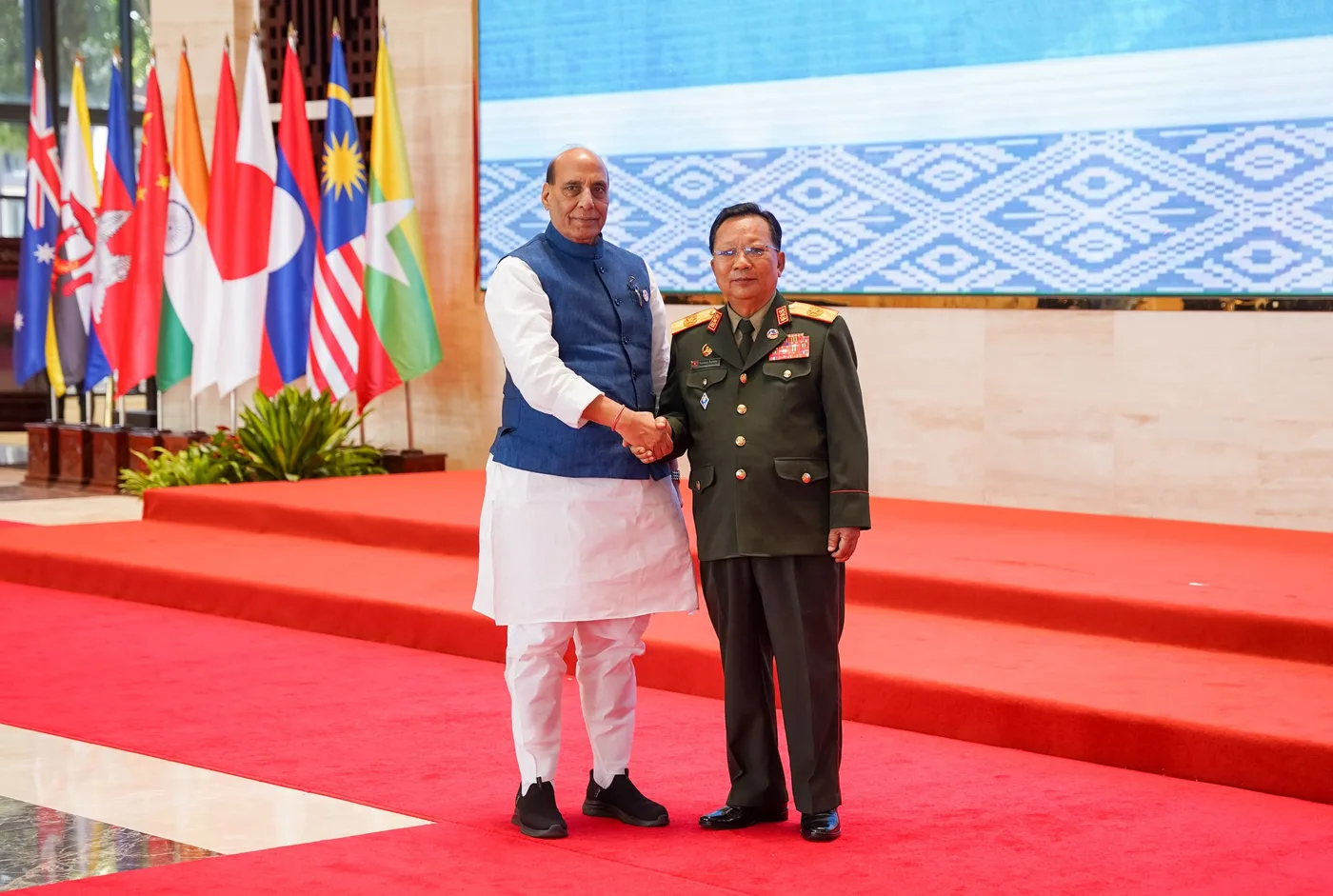
PLATE IV (PIB PRID 2075545 & PRID 2075446) — Raksha Mantri Shri Rajnath Singh conducting high-level bilateral defence consultations on the margins of the 11th ADMM-Plus summit in Vientiane, advancing defence industrial co-production and maritime domain awareness across the Indo-Pacific.
1. Four Pillars of the ‘RAKSHA’ Framework
As highlighted in the September 2026 ‘RAKSHA’ defence diplomacy document noted by the Press Information Bureau, India’s external defence engagement over the next decade is structured around four mutually reinforcing pillars:
1.1 Strategic Partnerships
Deepening institutionalised 2+2 dialogues, logistics exchange agreements, research and co-development frameworks, and technology-sharing arrangements with key partners across the Indo-Pacific, Europe, West Asia, Russia, the Americas, and the Global South.
1.2 Capacity Building & Training Cooperation
Providing professional military education at premier Indian institutions — including the National Defence College (NDC), Defence Services Staff College (DSSC), and service academies — alongside mobile training teams, hydrographic assistance, and maintenance support for partner nations.
1.3 Indigenous Defence Exports as Statecraft
With exports reaching ₹38,424 crore across 80+ countries in FY 2025–26, Indian platforms, radars, artillery, patrol vessels, and missiles serve as instruments of long-term interoperable partnership rather than mere commercial transactions.
1.4 Maritime Security & Humanitarian Assistance
Acting as a first responder in the Indian Ocean Region through anti-piracy patrols, Humanitarian Assistance and Disaster Relief (HADR), search-and-rescue operations, and maritime domain awareness sharing.
2. Joint Military Exercises & Attaché Diplomacy
Bilateral and multilateral exercises across land, naval, and air domains — complemented by an expanded network of Indian Defence Attachés abroad — build operational familiarity, doctrinal dialogue, and crisis-communication channels across diverse theatres.
Ministry of Defence (PIB) Disclosures & Doctrinal Synthesis
Official Government of India Press Information Bureau (PIB) records corroborated and synthesized for this research monograph under our 5-Level Verification Protocol.
The ‘RAKSHA’ Diplomatic Matrix: Minilateral Co-Production, Logistics Reciprocity, and Indo-Pacific Maritime Deterrence
On the sidelines of the 11th ASEAN Defence Ministers’ Meeting-Plus (ADMM-Plus) in Vientiane, Raksha Mantri held structured bilateral summits with the Defence Ministers of South Korea, Australia, New Zealand, Japan, and the Philippines, advancing shipbuilding co-development, air-to-air refuelling reciprocity, and UNCLOS freedom-of-navigation frameworks.
India’s defence diplomacy has pivoted from ceremonial visits to operational force-multiplication—exemplified by the India-Australia Air-to-Air Refuelling arrangement and real-time IFC-IOR maritime domain awareness sharing. Establishes a resilient network of mutual logistics support agreements (LEMOA, MLSA, ACSA) from the Persian Gulf to the Western Pacific without compromising India’s strategic autonomy.
Strategic Autonomy Meets Co-Development: Operationalising INDUS-X, SOSA, and Jet-Engine Technology Transfer
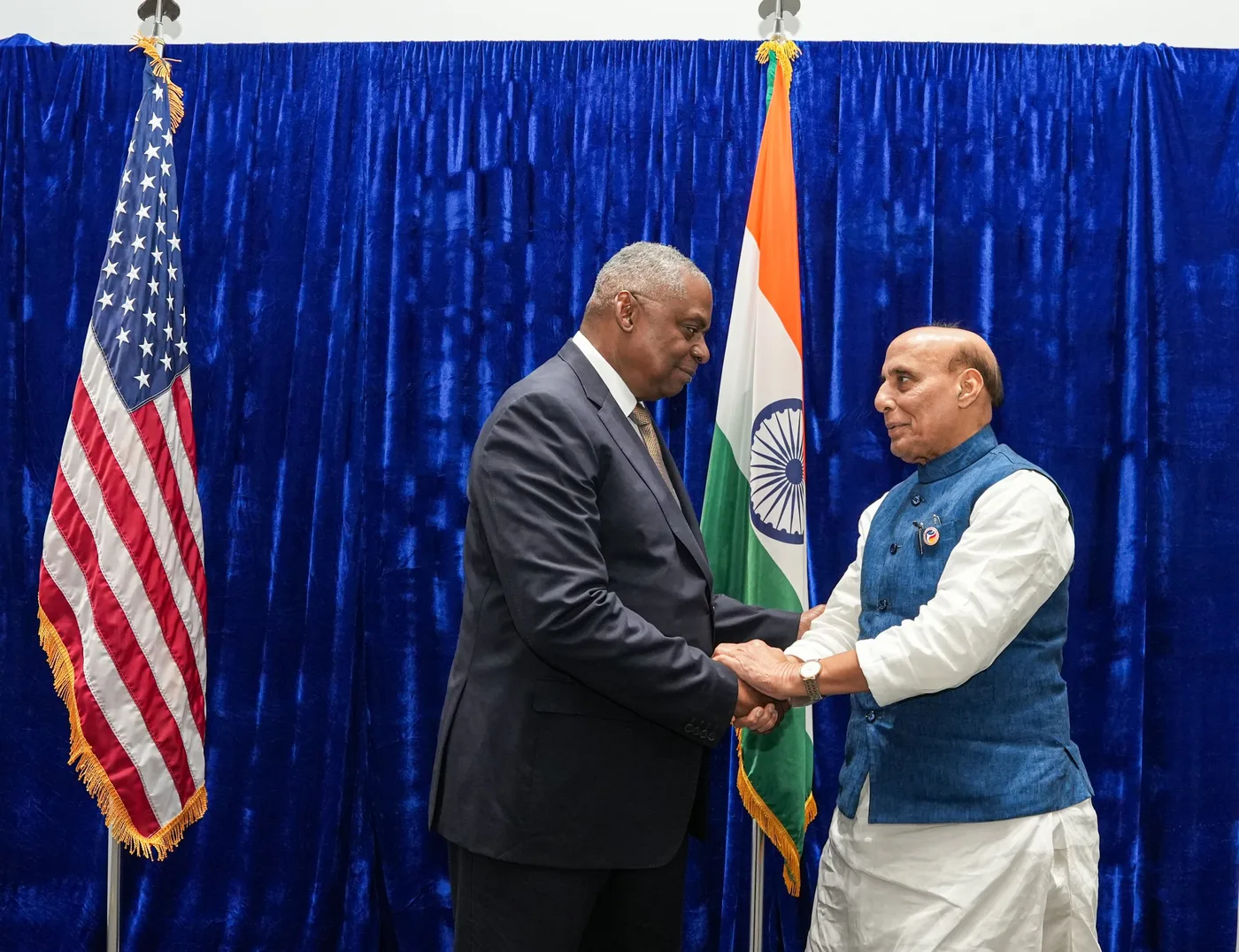
Raksha Mantri and the US Secretary of Defense reviewed the operationalisation of the US-India Defence Industrial Cooperation Roadmap, welcoming the signing of the bilateral Security of Supply Arrangement (SOSA), the Memorandum of Agreement regarding assignment of Liaison Officers, and joint innovation under INDUS-X.
Posting Indian liaison officers inside key US commands and operationalising maritime domain awareness sharing strengthens combined situational awareness across the Indo-Pacific without entering a formal military alliance. Enhances interoperability in anti-submarine warfare, high-altitude ISR, and Indo-Pacific maritime logistics.
Indo-Japanese Co-Development: BEL–Japan UNICORN Stealth Integrated Antenna Masts and Naval Signature Reduction
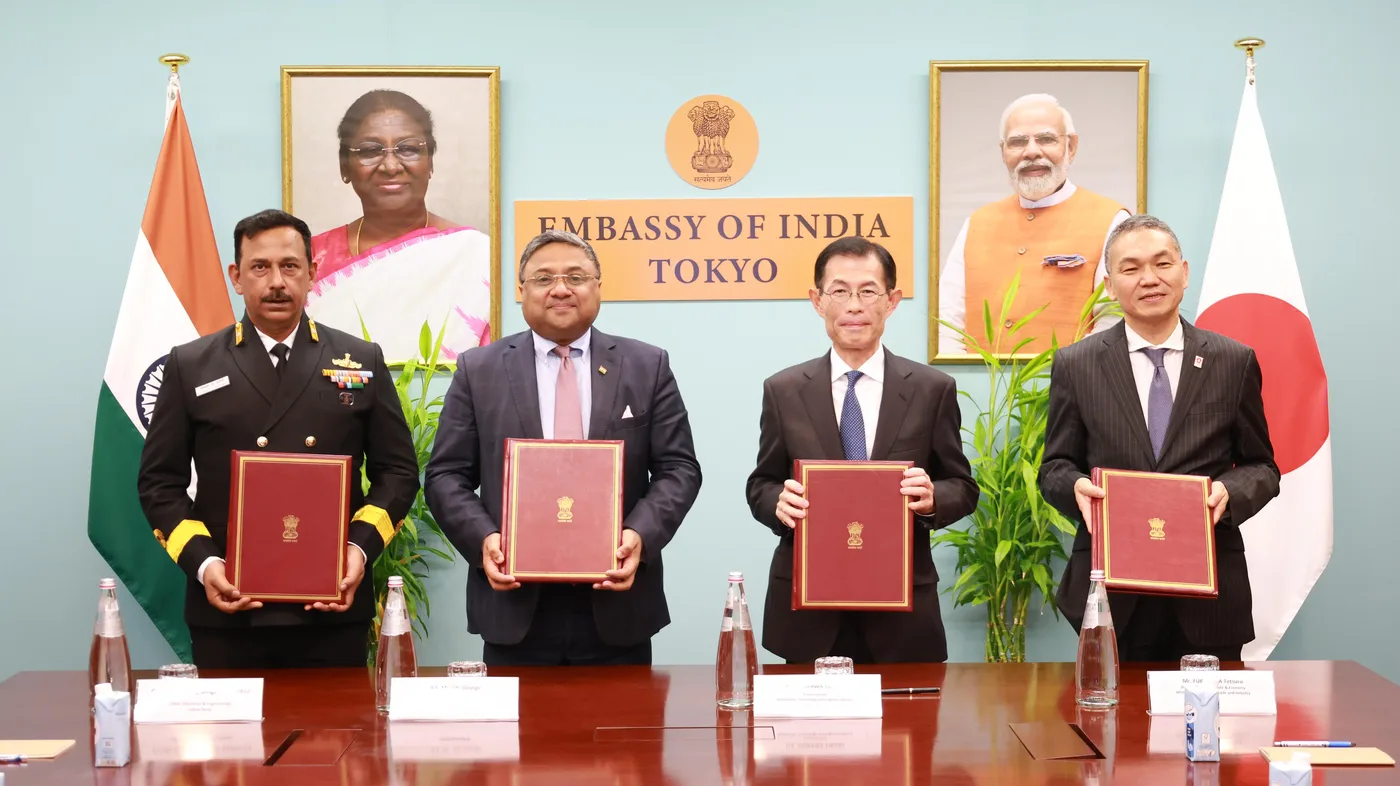
India and Japan signed a Memorandum of Implementation (MoI) in Tokyo for the co-development of Unified Complex Radio Antenna (UNICORN) masts for Indian Navy surface combatants, to be co-produced in India by Bharat Electronics Limited (BEL) in collaboration with Japanese industry.
Reducing the radar cross-section (RCS) of next-generation destroyers and frigates via integrated composite antenna masts directly improves surface combatant survivability in high-threat missile environments. Deepens Tokyo–New Delhi maritime-technological alignment across the East China Sea to Indian Ocean security continuum.