
India’s FY 2026–27 Defence Allocation (₹7.85 Lakh Crore) & Capital Modernisation Trajectory
An institutional analysis of the Ministry of Defence allocation of ₹7.85 lakh crore, over ₹2.19 lakh crore in capital outlay, and the 75% domestic procurement earmark reshaping armed forces modernisation.
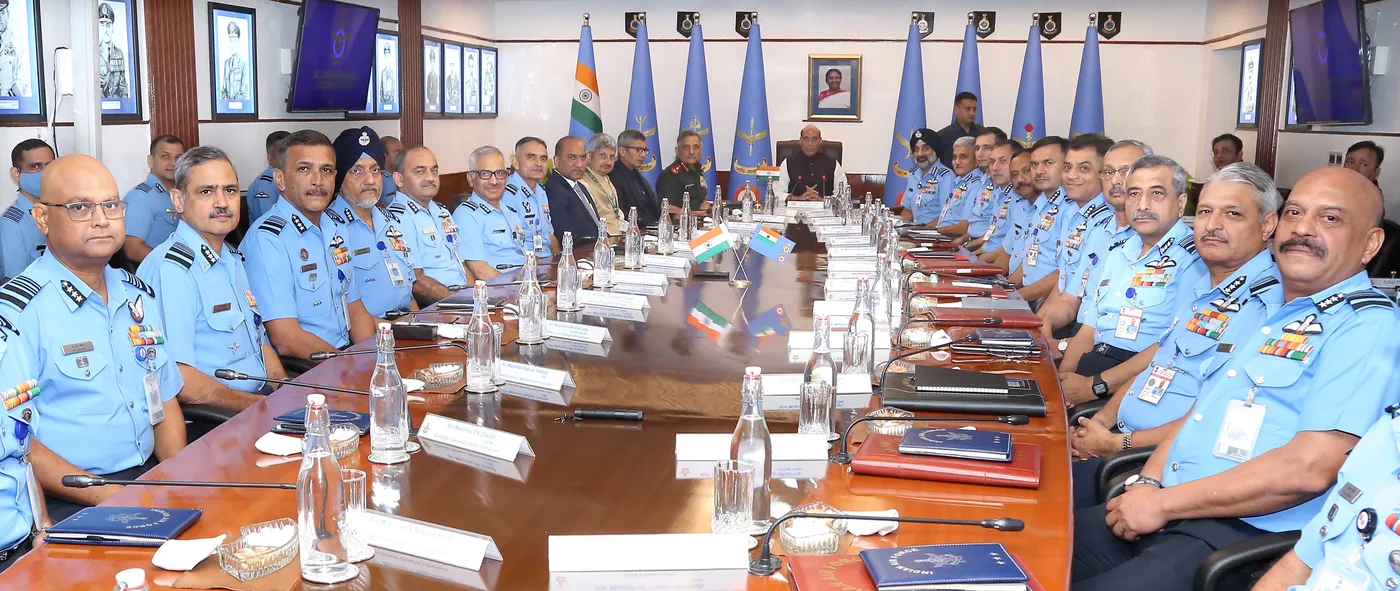
PLATE VI (PIB PRID 2074689) — Raksha Mantri Shri Rajnath Singh, Chief of Defence Staff Gen Anil Chauhan, Defence Secretary Shri Rajesh Kumar Singh, and Chief of the Air Staff Air Chief Marshal A.P. Singh reviewing capital acquisition and operational readiness at the Air Force Commanders’ Conference, New Delhi.
1. Strategic Context
India’s security environment demands simultaneous preparedness across high-altitude continental frontiers, an expansive Indo-Pacific maritime domain, and rapidly evolving non-kinetic domains including cyber, space, and the electromagnetic spectrum. Against this backdrop, the FY 2026–27 Ministry of Defence (MoD) allocation of ₹7.85 lakh crore marks a decisive milestone in sustained fiscal commitment to national security.
More significant than the headline outlay is its internal architecture:
- Total MoD Allocation (FY 2026–27): ₹7.85 lakh crore
- Defence Capital Allocation: Over ₹2.19 lakh crore
- Domestic Capital Procurement Earmark: Approximately 75% reserved for procurement from Indian industry
2. Capital Outlay & Tri-Service Modernisation Priorities
The capital outlay exceeding ₹2.19 lakh crore funds multi-year acquisition commitments and new inductions across the three Services and tri-service commands:
2.1 Land Forces & Frontier Mobility
Capital priorities focus on high-altitude mobility, indigenous artillery systems (including towed and mounted gun systems and multi-barrel rocket launchers such as Pinaka), air-defence upgrades, tactical communications, and night-fighting and counter-UAS capabilities along the northern and western borders.
2.2 Maritime Deterrence & Sea Control
For the Indian Navy and Indian Coast Guard, capital allocations sustain indigenous shipbuilding across public and private shipyards — spanning surface combatants, submarines, fleet support vessels, naval aviation, and coastal radar networks safeguarding India’s Exclusive Economic Zone (EEZ) and island territories.
2.3 Aerospace Power & Integrated Air Defence
For the Indian Air Force, modernisation expenditure centres on indigenous fighter production (Tejas variants), airborne early warning and control systems, medium transport aircraft, long-range surface-to-air missile systems (Akash and next-generation SAMs), and network-centric combat management.
3. The 75% Domestic Earmark: Policy to Industrial Reality
Earmarking roughly 75% of the capital acquisition budget for domestic industry creates predictable, multi-year demand visibility for:
- Defence Public Sector Undertakings (DPSUs) scaling platform integration;
- Private Sector Defence Primes investing in land, naval, aerospace, and unmanned systems;
- MSMEs and Tier-2/Tier-3 Suppliers localising sub-systems, electronics, special alloys, and munitions.
4. Institutional Assessment
For budgetary allocations to translate into combat capability without slippage, three institutional alignments remain essential:
- Contracting Velocity: Streamlining trial, evaluation, and contracting timelines under the Defence Acquisition Procedure (DAP);
- R&D-to-Production Transition: Bridging DRDO and iDEX prototypes into series production;
- Joint Prioritisation: Aligning capital acquisitions through the Chief of Defence Staff (CDS) and Department of Military Affairs (DMA) to eliminate inter-service duplication.
Ministry of Defence (PIB) Disclosures & Doctrinal Synthesis
Official Government of India Press Information Bureau (PIB) records corroborated and synthesized for this research monograph under our 5-Level Verification Protocol.
Capital Outlay vs Squadron Strength: Aligning the ₹6.21 Lakh Crore Defence Budget with Aerospace & Force Modernisation
Addressing the Air Force Commanders’ Conference at Vayu Bhawan in the presence of the CDS, Defence Secretary, and Secretary DDR&D, Raksha Mantri reviewed IAF operational readiness, air-defence network modernisation, and the accelerated induction of indigenous aerospace platforms.
Air-power modernisation is the single most capital-intensive pillar of India’s deterrence posture, requiring synchronized multi-year outlays for LCA Tejas Mk-1A/Mk-2, LCH Prachand, C-295 transport aircraft, and integrated SAM networks. Addresses fighter squadron depletion and airborne early-warning gaps across the Northern and Western air commands through indigenous radar, EW, and long-range standoff weapon integration.
MSME Shipyard Decentralisation: How Auxiliary Naval Vessel Contracts Free Major Defence Shipyards for Frontline Combatants
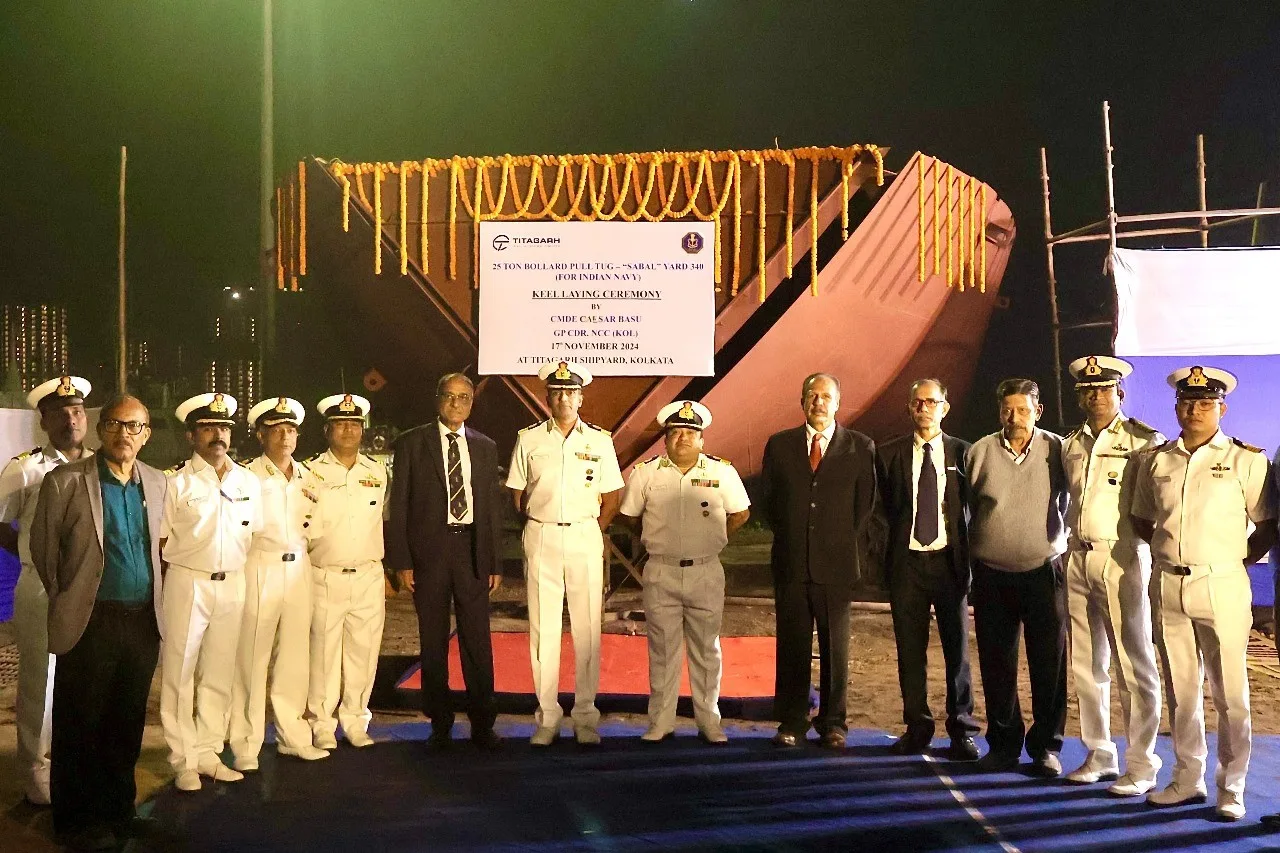
Under the Make in India and Aatmanirbhar Bharat shipbuilding policy, the Indian Navy launched the fifth 25-Tonne Bollard Pull Tug Yuvan and inducted indigenous Ammunition-Cum-Torpedo-Cum-Missile (ACTCM) barges built by private Indian MSME shipyards under Indian Register of Shipping (IRS) standards.
Fleet turnaround speed in wartime depends heavily on harbour tugs, torpedo/missile ammunition barges, and diving support vessels that re-arm frontline destroyers and submarines within hours of docking. Accelerates ammunition and torpedo reload cycles across Western, Eastern, and Andaman & Nicobar naval bases.